Wednesday, March 7, 2012

Atlanta on My Mind

Back during the summer of '09 I enjoyed a couple of days in Atlanta: sampling 40 different flavors of soda at the World of Coca-Cola (at which I never realized just how much fun paying $15 to have advertising shoved in your face can be); watching Bobby Cox getting ejected at a Braves game at Turner Field; visiting the sublime Martin Luther King National Historic Site... oh, and visiting a bunch of post offices. I'm guessing you probably already knew that part.

Atlanta Main Post Office
Located near Hartsfield International, this modern building -- which also serves as the Atlanta P&DC -- was fun:


(Here's Google's Street View take on it:)


Two different postmarks, one with the four 'killer bars' on it, nice clerks. USPS's Owned Facilities Report states that the land has been owned since 1980, though I don't know when the building itself was built.

A couple of stations downtown are under RAOI study for closure, including Phoenix Station, which had a warped-from-overuse but perfectly legible ovoid postmark. I love finds like that.

Atlanta, GA: Phoenix Station post office


Also on the possible chopping block is this basement office in the Peachtree Center. The supervisor maintained a postmark different from those of his clerks, and it actually resembled a peach! It was totally awesome.

Atlanta, GA: Peachtree Center Station post office


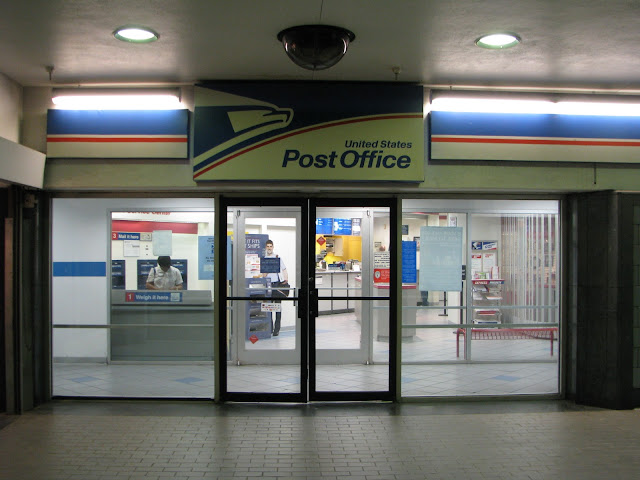
The CNN Center, home to the world's longest "freestanding" escalator, is also home to a post office that could easily become an Apple Store if closed, because two of its sides are all plate glass. This office was on the SBOC closure study back in 2009, but escaped discontinuance. Apparently it makes more than $600,000 a year since it wasn't placed on RAOI. And Sheryl(?), if you're reading this, I still remember you as an incredibly friendly and upbeat clerk. Thank you.

Atlanta, GA: CNN Center Station post office


Here are a few other locations:
Atlanta, GA: Georgia State University CPU


Atlanta, GA: Dunwoody Branch post office


Located in a nice part of town.

This contract unit was short-lived and discontinued soon after I visited it. I believe I'm the only postmark collector ever to have obtained a cancel from it.

Marietta, GA: Windy Hill Square CPU

Sunday, March 4, 2012

More Stories from the CPU Hit List

(Edit 3/5/11 5:35 P.M.: As of this time there appear to be at least modest political efforts toward retaining the remainder of these 20 locations, most of which are set to close at the end of this month. Report from Temple, Texas. Why these Congressmen can't step up for the rest of the postal system, who knows?)

A couple of months ago Going Postal brought you the story of the small-town post office [CPO] in Alplaus, NY -- one of 20 contract offices with P.O. Boxes arbitrarily called out to be closed as part of a labor contract between USPS and the APWU that purports to give labor back to union employees but in reality serves no one's interests; particularly not those residents of the communities affected. I am all for giving official union clerks more work, but will shuttering these locations really create positions at neighboring post offices? And is it really worth terminating access to these communities? So: We have 20 low-cost contracted post offices, many of which are profitable, and they have been arbitrarily determined to be closed because they provide too much service -- namely, they supply P.O. Boxes. Let's take a look at some more locations being shuttered as part of this contract resolution.

Bridgeport, CT: Central Commons CPU


Whom is this closure helping?

20% of Bridgeport residents live below the poverty line, and the Central Commons CPU was a cost-effective way of providing service to a community that was visibly distressed when I visited back in 2009. Now I know I've said places are poor in the past, but let's see if we can back up this assertion with numbers.

A demographic analysis conducted by the author using ESRI's Business Analyst shows that of the 7,900 people living within 0.6 miles of this CPU (all of whom are closer to Central Commons than to any other post office), 20.3% resided in households with annual income of less than $15,000 in 2010. More than a third of households made less than $25,000 a year, and 30% had no vehicles available to them. This means that, while the next post office -- Noble Station -- is 1.2 miles away, that could entail an additional 24-minute walk for residents without cars.

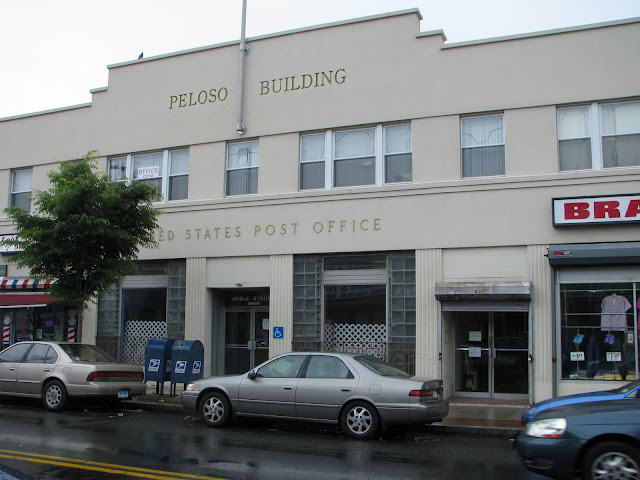
Oh, did I mention that the neighboring Noble Station Post office is presently being studied for closure under RAOI? It's in a pretty handsome building, too.

Bridgeport, CT's Noble Station post office


The clerk at Central Commons sat behind a thick pane of bulletproof glass and wasn't sure about giving postmarks to a collector, but he came around when I showed him the POM regulations.

The CPU closed December 31, 2011.

Mill Hall, PA: Salona CPO


Despite the fact that this location had been closed since last April -- before that contract even took effect -- this was a pleasant find. Not only do I generally love photogenic offices that lie in the side of someone's home, but this office still had its sign up, and it stated Salona Rural Station. CPOs were known as Rural Stations / Branches until the early 1970s. Obviously that location had been around for ages!

Let's have a closer look:


Residents of the small community now head up the road a couple of miles into larger Mill Hall.


Concord, NH: Boscawen CPO


A town of 4,000 is served by a long-time contractor who knows her community like the back of her brass-plated P.O. Boxes. Now, everyone has to drive four miles down to Concord's Penacook Station to conduct their postal business. (And speed limits in New Hampshire tend to be a bit low!)


I visited Boscawen at the beginning of 2010 and re-visited it during its last week this year. Contractor Laura Lane had a fantastic assortment of stamps and I purchased $150 worth from her over my two visits. She's one of the nicest women you would ever care to meet. The office made some money, too. In terms of costs, "Boscawen's contract station costs the Postal Service less than $8,500 annually because the town provides and maintains the building free of charge" (Concord Monitor).

Boscawen P.O. Boxes


Here's the full CM article.

Again, it appears that many of the locals affected are those who can least afford the change: "Our recent census data indicates that about 48 percent of the town's population of just under 4,000 live at or below the poverty level," she wrote. "We have 12 mobile home parks, most of them consisting of outdated trailers from the 1950s, '60s, and '70s."

Again, who's being helped by this closure? The CPO closed January 6, 2012 -- same as Alplaus.


The Better Letter CPU in Brooklyn, NY -- which is used to divert traffic from the highly trafficked Williamsburg Station post office -- was written about here. Ironically, when I visited that station back in 2010, there were flyers directing people to visit the CPU fr quicker service!

A website called the Confederation of Postal Contractors -- an informal consortium of the "CPU 20" -- can be found here.

Sunday, February 26, 2012

Postal Bucket List: Hawaii Edition

On this blog I've shared with you some wonderful and unique experiences I've had during my postal adventures around the country. By now I've visited nearly 10% of all USPS facilities: independent post offices, branches and stations, CPUs, annexes, and processing plants; but there is still plenty more to go. What follows is a list of offices to which I've not been, but which, by my understanding, are either in such bizarre locations or otherwise so unique that a visit to them has to be made. So, without further ado, I present to you:

Evan's Postal Bucket List (Part I):
1. Kalaupapa, Hawaii -- the post office of the leper colony

(Photo from local.yahoo.com)

The beautiful and tranquil setting, in a valley along the northern rim of the oft-overlooked island of Molokai, belies a fascinating history. Established in the 1860s, Kalaupapa is the site of what was effectively an island prison: lepers were banished here in accordance with mandatory isolation by Hawaiian King Kamehameha V, and the facility housed as many as 1,200. This held for a century: until 1969, ten years after Hawai'i's becoming a U.S. state, the policy of isolation was still in effect. The site has since become a National Historical Park operated by the National Park Service.

Today, there are still about 14 former sufferers of Hansen's disease living on the site. By law they are allowed to remain there, and it is probable the location will cease once the population dwindles to 0. The post office serves only that population, as access to the site is highly restricted. Access to the valley is granted only to those who take specific tours:

State law requires all individuals to secure a permit to enter from the State Department of Health prior to visiting Kalaupapa. Damien Tours arranges for permits for individuals booking with them. Persons that do not prearrange their visit to the park with Damien Tours (808) 567-6171 will be denied access to the park. [nps.gov]

Last summer, USPS announced the study for closure of the Kalaupapa post office. By December it was determined that the office couldn't be closed, despite the small population served. Even former sufferers of leprosy have the right to universal postal service, too!

My friend, a fellow member of the PMCC, took a tour to the site last January, and notes that while it's possible to photograph the office, access to get a postmark in person is frequently denied so as to prevent interactions of tourists with the town's residents, who have been scarred by leprosy in the past. In this instance tour operators will take philatelic materials to be hand-cancelled at a later date.

This website tells a story of visiting the Kalaupapa P.O. (as well as the actual town) and meeting Ellen, Postmaster Relief, shown below:


2. Hoolehua, Hawaii -- home of the Post-A-Nut service
It's not every post office that gets its own review page on TripAdvisor. Clearly, this place is cool.


(Photo courtesy TripAdvisor.)

The island of Molokai also houses the small town of Hoolehua, the story of which I first read in my Let's Go: Hawaii travel book. The premise is that you can actually mail a coconut, free of packaging, so long as you have a postage/address label affixed to one side.

First, let me validate that yes, you need no packaging (so long as the coconut is not being shipped internationally). Heck, here's a company that lets you order them, slaps a shipping label on them, and puts them in the mail. Coconuts are considered so resilient, and otherwise tamper-proof, that USPS and the Postal Inspection Service will indeed allow a coconut to be mailed free of external packaging. The cost ranged from perhaps $8 to $12, depending on its size.

Now that's cool in and of itself, but the Hoolehua Post Office takes it one step further: they provide the coconuts for shipping themselves. They even have permanent markers that you can write the recipient's address on. Definitely a must-visit.

Here's a photo of some coconuts ripe for the sending at the Hoolehua P.O. (Source)

The guy's got lots of photos of the process on his Flickr page.


3. Post Offices of the Pacific Islands -- way beyond Hawaii
USPS not only administers the mail for Guam and American Samoa, but also for other 'commonwealths in political union with the United States' (the Northern Mariana Islands) and other countries closely associated with the U.S. (the Marshall Islands). They are U.S. Post Offices!

One will note that the Northern Mariana Islands appeared, along with Guam, Puerto Rico, etc., on the Flags of Our Nation stamps (image by USPS):


My lovely friend and her husband, a Marine stationed on Okinawa, took a trip to Guam and took these photo for us:


Of course, you can read about all the post offices of Hawai'i and other Pacific Islands in the PMCC Directory! I 'adopted', and was responsible for editing, the Hawai'i list this time around.

Friday, February 24, 2012

Mail Processing Plant Photos and Observations, Part II

First, there are a few observations that I find interesting with regard to the Area Mail Processing consolidations:
1. Chicago could be left without its own postmark if the Cardiss Collins P&DC downtown loses its originating mail to suburban plants. Ditto Fort Worth, whose P&DC would be responsible for destinating mail to Dallas while losing originating mail to the North Texas P&DC. Not to mention New Orleans, which loses everything out to Baton Rouge.

2. The amount of mail crossing state and postal District borders to be processed would now be astronomical: some Connecticut Valley mail would be processed in the Westchester District; there's Baltimore District mail headed to Central Pennsylvania; Nevada-Sierra processing occurring in Salt Lake; northeast Texas mail handled in Louisiana while the mail processing equivalent of musical chairs occurs among the Dallas and Fort Worth Districts. In fact, New York's Triboro District might be the first left without any originating mail processing facility if all its mail gets postmarked in New York's Morgan P&DC.

3. Given the dissolution of mail processing boundaries by state and District lines, what do the AMP consolidations mean for the postal hierarchy, and who's responsible for resolving consumer affairs and other issues as they pertain to mail handling?

4. Building on the above, would Virginia residents really be pleased with a postmark from North Carolina; Texas residents with a postmark from Shreveport; Tennessee residents with a postmark from Atlanta; Savannah residents with a cancel from either SC, GA, or FL? Et cetera.

5. What about security issues? What if, say, dangerous pieces of mail couldn't be sourced locally since mail processed at a given plant could have originated from any of 500 post offices across three states as opposed to a localized cluster?


So, let's look at some photos of scheduled-to-close P&DC/Fs that are a part of their hosts' respective main post offices. Will these locations be moving to smaller, predominantly retail sites now, or be used as "delivery hubs"?

Salem, Oregon P&DF

> Originating and destinating mail to be consolidated into the Portland, OR P&DC.

When I was visiting the MPO I met the philatelic clerk, who was very friendly and offered to get the Postmaster's autograph on a couple of the cards I got hand-cancelled. She mailed them back to me later that week. As far as location, note the continuation of a trend that you might have noticed the emergence in my previous entry, of on the map below -- namely, the proximity of the processing plant to the local predominant highway. The present mail processing system wasn't created without thought.


White River Junction, VT P&DC

> Originating and destinating mail to be consolidated into the Manchester, NH and Burlington, VT P&DCs.


Ah, White River Junction. This facility has easy access to two Interstates and has been around since 1984. The MPO also moved out here from a beautiful downtown WPA office that became known as Lyman Station. Officially closed last summer, Lyman Station had been a box unit with no retail services for some time. The current location, among a (Vermont-sized) sea of car dealers, exhibits decidedly less grandeur.

[discontinued:] White River Junction, VT: Lyman Station post office


On the plus side, the study to consolidate the decidedly large Manchester, NH P&DC (which shares residence with the Manchester MPO) was disapproved.


Thursday, February 23, 2012

In Pre-moriam: Processing Plant Photos, et al

Pre.S. There's a Part II to this entry, which includes observations and questions regarding consolidation plans.

Well, it seems nothing can stop USPS management now: the list of 223 processing plant consolidations is out. That said, and with the presumption that this process will be extremely difficult to stop, I present to you photographs of some of the plants that are slated to close. I started photographing P&DC/Fs about a year ago. I've been to perhaps 20 all in all, but will be presenting just a few here. More can follow.

Note: Anyone who would like to submit photos of their own plant [exterior] is more than welcome to; I'm happy to make more posts or put together a full gallery in the future. If you have any memorable stories or funny anecdotes about your processing plant, also feel free to pass that along. I'll archive it.

Also: Definitions might be in order, since I've noticed some folks found my site by searching for the meaning to some terminology. Originating mail is that which has been deposited by the mailer and which is entering the mailstream. It generally needs to be cancelled, coded, and routed to other processing centers for delivery. This is the P: Processing in P&DC. Destinating mail (the D: Distribution in P&DC) is that which is has been processed, brought to its final sorting site, and which is getting ready to be delivered.

Southern Connecticut P&DC; Wallingford, CT

> Originating and destinating mail to be consolidated into the Hartford, CT P&DC.

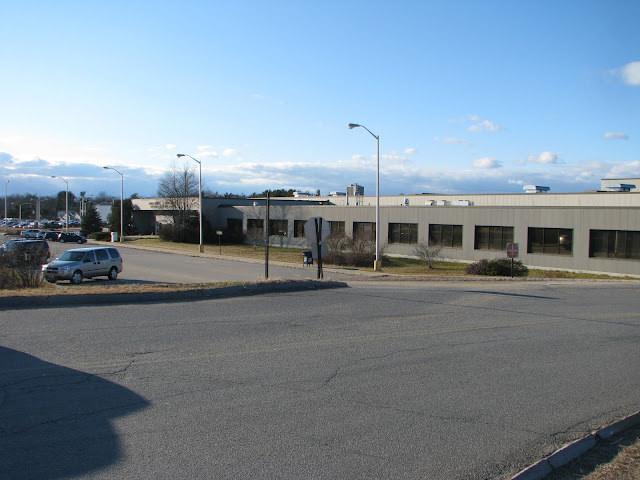
USPS has owned 24 Research Parkway in Wallingford off I-91, a town halfway between New Haven and Hartford, since 1995. The P&DC measures about 400 feet by 800 feet and handles mail for the 063 and 064 ZIP code prefixes. Mail postmarked here receives "SOUTHERN CT 064" spray cancels. I've been unable to validate whether it maintains a hand-cancel / dating device with its name on it.


Stamford P&DC; Stamford, CT

To be consolidated into the Westchester, NY P&DC (both originating and destinating mail).

Driving home from Rhode Island one summer Saturday I followed a convoy of mail trucks taking exit 6 on I-95 and soon discovered the Stamford P&DC. I popped into the parking lot at 7, asked if anyone knew about any potential hand-cancels inside, and a sorter volunteered to help me get my cards postmarked with a Stamford P&DC round dater while I waited outside. How nice is that? I hope his commute doesn't get too difficult with the move to Westchester.

The Stamford P&DC is located on an industrial/commercial strip southwest of downtown Stamford and has easy access to I-95. It measures about 350 by 400 feet, and USPS has owned the site since 1988. This facility handles the mail for southwestern Connecticut post offices.


Altoona P&DF; Duncansville, PA


> To be consolidated into the Johnstown, PA P&DF (both originating and destinating mail).

A relatively recent plant, USPS has been at this site since 1998. The facility sits back off a nondescript road near I-99 south of Altoona. The area otherwise resembles sprawl. It doesn't look too big from the front, though satellite imagery shows that the building measures about 250 by 500 feet.


Updates from previous entries
Easton, MD P&DF: Two proposals were withdrawn: the consolidation of the Easton P&DF into Baltimore and the Wilmington, DE P&DC into Philadelphia. Instead, the current plan being studied is to consolidate Easton, MD mail into Wilmington.

Frederick, MD P&DF: Save the Post Office reports that issues abound with regard to the Frederick plant's consolidation into Baltimore. I witnessed hints of this in western Maryland right after the final transition occurred: at one PO a woman berated the clerk for her Monday's mail arriving Tuesday morning. The clerk was apologetic and noted that mail trucks which used to arrive at 7:30 from Frederick were, at least then, arriving at 11:00 from Baltimore.

Long Island Processing Plants: The Queens P&DC is being consolidated into Brooklyn. Meanwhile, "Triboro NY 112" cancels might be a thing of the past as originating mail from the Brooklyn P&DC is to be consolidated into New York's Morgan P&DC. This implies that Brooklyn would be a destinating mail-only plant, also handling that for Staten Island. The Western Nassau Mail Processing Facility will remain open, as will the New York L&DC in Bethpage.

Here are a couple of photos of the positively massive Morgan P&DC, near the New York Main Post Office on the west side of Manhattan: